
|

 | 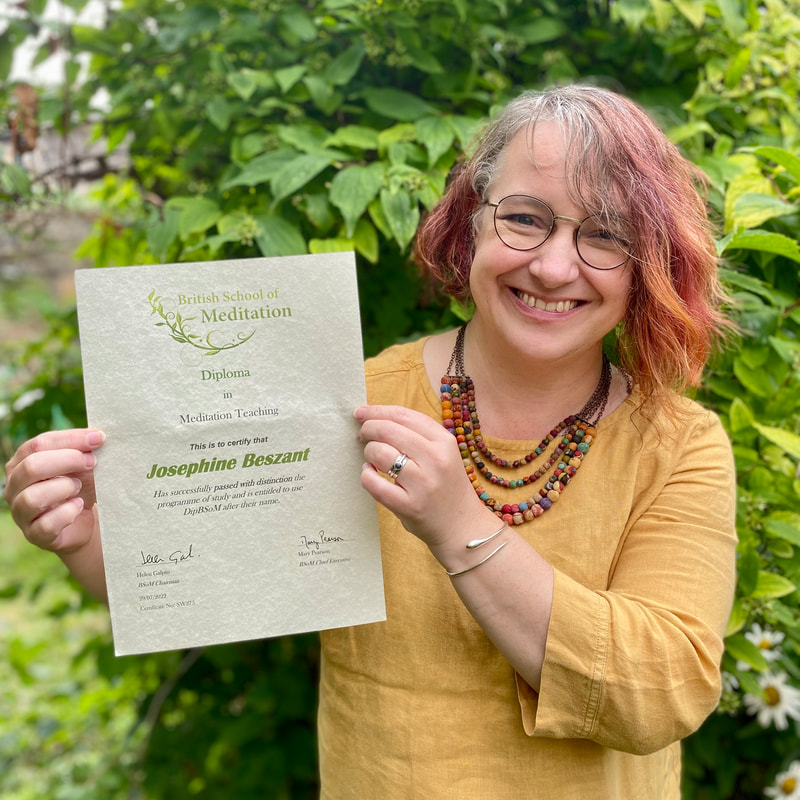 |  |
Our latest experiences and creative treasure boxes contain both tools to help meditation and creative exercises. I have always found creativity and meditation to go happily hand in hand (and indeed science proves they activate the same type of brainwaves). I've just qualified formally as a meditation teacher via the British School of Meditation and here's some of my journey to this place....
Throughout most of my life I have dipped in and out of the practise of meditation - sometimes not entirely sure what it was or even how I felt about being someone who meditated.
I started connecting with meditation as a concept and a practise when I was doing an ‘A’ Level in Buddhism and Christianity in my teens. I was fascinated by the comparisons between the two religions and tentatively tried Zen meditation. Although I enjoyed it I found it hard and wrongly felt I had to perhaps commit to a religion to practise it properly.
Around the same time I went to a silent retreat at a Christian convent. This was also an enjoyable but challenging experience. Their way of meditating was different again and involved chanting and long periods of silence and contemplation.
So in my teens and twenties I associated meditation with religion and belief. It wasn’t until much later that I understood religion and meditation are not necessarily connected and I felt free to meditate in a different way.
After a period of ill health I realised I could lower my blood pressure significantly with daily meditation. It made me feel more in balance and gave me tools to centre myself in times when life was tough. Overall I was calmer, less stressed and happier when I meditated. Meditation helped ease pain and discomfort as well as improving my sleep.
When I started teaching more in my early 40’s I realised that I had worked into my practise as an artist a period of refocussing and meditation before I started to work in the studio. Sometimes this was as simple as a few minutes of centring my attention and breathing; sometimes it meant going for a mindful walk; doing some tai chi or just sitting and noticing my thoughts, observing them and letting them go before I worked. I hadn’t really noticed how beneficial this was to my creative process, it was just something I did. I did notice however how much a busy mind, stress and tension affected the creative process of those I was teaching.
And so slowly I began to explore more about meditation. I did more tai chi; a course on embodiment and somatics, yoqi, I read and practised mindfulness, took part in shamanic meditation and journeying, experienced meditation on retreats and used it more and more in my daily life. I tentatively introduced some of my meditation practises occasionally to those I was leading on a creative journey. I discovered their experience was richer, easier and more satisfying because of it.
To my mind creativity has never been so important in our world as it is today - and yet the stress of fast paced contemporary living makes it tough to achieve the space and time to access it. Creativity is vital to our personal lives as well as our professional ones. To be able to think and act creatively helps us problem solve and grow as humans. I know meditation can help access that creative part of ourselves more easily, to have a richer and more fulfilling connection to life.
I hope you'd like to join me at Happy House for some creative experiences that will combine some of what I have learnt from meditation too.
Throughout most of my life I have dipped in and out of the practise of meditation - sometimes not entirely sure what it was or even how I felt about being someone who meditated.
I started connecting with meditation as a concept and a practise when I was doing an ‘A’ Level in Buddhism and Christianity in my teens. I was fascinated by the comparisons between the two religions and tentatively tried Zen meditation. Although I enjoyed it I found it hard and wrongly felt I had to perhaps commit to a religion to practise it properly.
Around the same time I went to a silent retreat at a Christian convent. This was also an enjoyable but challenging experience. Their way of meditating was different again and involved chanting and long periods of silence and contemplation.
So in my teens and twenties I associated meditation with religion and belief. It wasn’t until much later that I understood religion and meditation are not necessarily connected and I felt free to meditate in a different way.
After a period of ill health I realised I could lower my blood pressure significantly with daily meditation. It made me feel more in balance and gave me tools to centre myself in times when life was tough. Overall I was calmer, less stressed and happier when I meditated. Meditation helped ease pain and discomfort as well as improving my sleep.
When I started teaching more in my early 40’s I realised that I had worked into my practise as an artist a period of refocussing and meditation before I started to work in the studio. Sometimes this was as simple as a few minutes of centring my attention and breathing; sometimes it meant going for a mindful walk; doing some tai chi or just sitting and noticing my thoughts, observing them and letting them go before I worked. I hadn’t really noticed how beneficial this was to my creative process, it was just something I did. I did notice however how much a busy mind, stress and tension affected the creative process of those I was teaching.
And so slowly I began to explore more about meditation. I did more tai chi; a course on embodiment and somatics, yoqi, I read and practised mindfulness, took part in shamanic meditation and journeying, experienced meditation on retreats and used it more and more in my daily life. I tentatively introduced some of my meditation practises occasionally to those I was leading on a creative journey. I discovered their experience was richer, easier and more satisfying because of it.
To my mind creativity has never been so important in our world as it is today - and yet the stress of fast paced contemporary living makes it tough to achieve the space and time to access it. Creativity is vital to our personal lives as well as our professional ones. To be able to think and act creatively helps us problem solve and grow as humans. I know meditation can help access that creative part of ourselves more easily, to have a richer and more fulfilling connection to life.
I hope you'd like to join me at Happy House for some creative experiences that will combine some of what I have learnt from meditation too.
There are few more lovely things about the summer than the fruits that the season brings and the gorgeous puddings they lend themselves to. Gooseberries are wonderful - they have sweetness which comes with a sharp edge so, although there are recipes which use them raw, I think a little cooking brings out their character best in this classic, and very easy, dish.
The “foole”has been around for a while - it’s first mentioned as a dessert in Tudor times. Custard was originally the base for the dish but the richness of cream and the lush texture of Greek yoghurt make them perfect for this confection.
Gooseberries come with a little stalk at one end and a withered blossom at the other - their tops and tails. You need to remove these from your fruit. And if you’re not a gooseberry fan substitute raspberries - they work equally well, as do several other soft fruits.
So pour yourself a drink, put some on some music and prepare to have some fun.
The “foole”has been around for a while - it’s first mentioned as a dessert in Tudor times. Custard was originally the base for the dish but the richness of cream and the lush texture of Greek yoghurt make them perfect for this confection.
Gooseberries come with a little stalk at one end and a withered blossom at the other - their tops and tails. You need to remove these from your fruit. And if you’re not a gooseberry fan substitute raspberries - they work equally well, as do several other soft fruits.
So pour yourself a drink, put some on some music and prepare to have some fun.
Ingredients
Serves 4
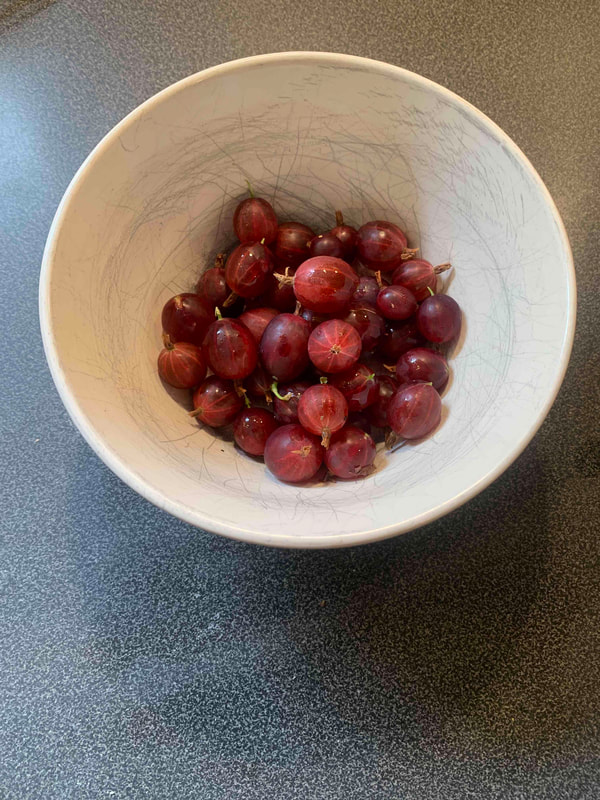
250g gooseberries, washed, topped and tailed
200g Greek yogurt - use the full fat stuff - it works best
200ml double or heavy cream
3 tbsp caster sugar
1-2 tbsp icing sugar
1 tsp vanilla extract
250g gooseberries, washed, topped and tailed
200g Greek yogurt - use the full fat stuff - it works best
200ml double or heavy cream
3 tbsp caster sugar
1-2 tbsp icing sugar
1 tsp vanilla extract
How to make your Fool
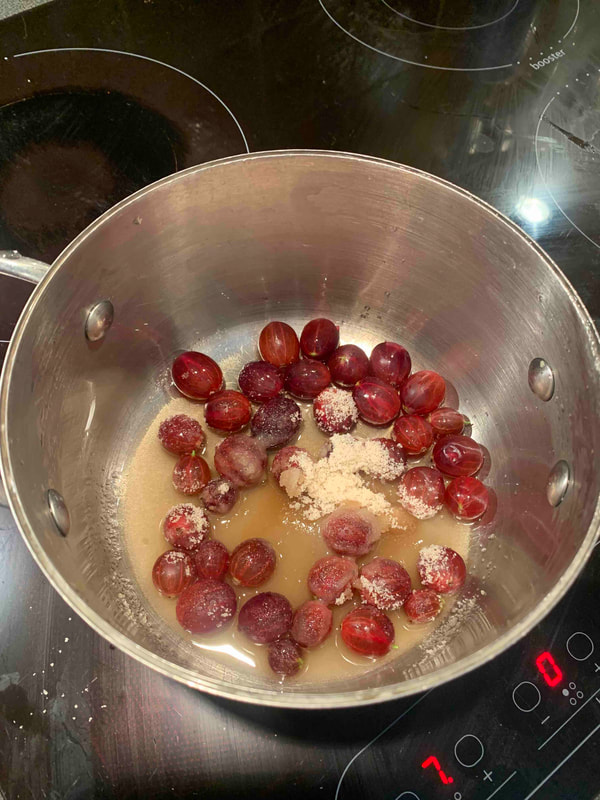
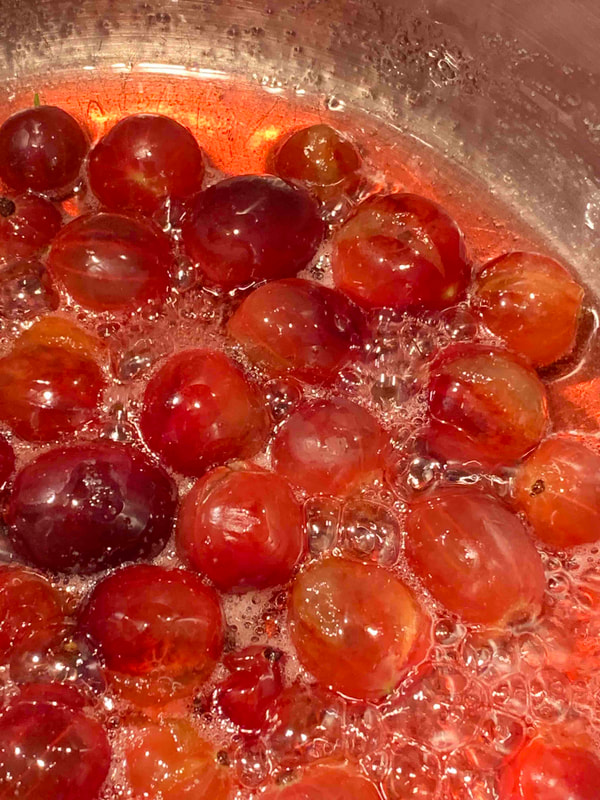
Put the caster sugar and gooseberries in a heavy pan with 2 tablespoons of water.
Gently bring to a simmer. When the fruit starts to burst open remove the pan from the heat.
With a fork mash the gooseberries until you have a pulp. Transfer to a bowl and then chill in the fridge for about 20 minutes or until cold.
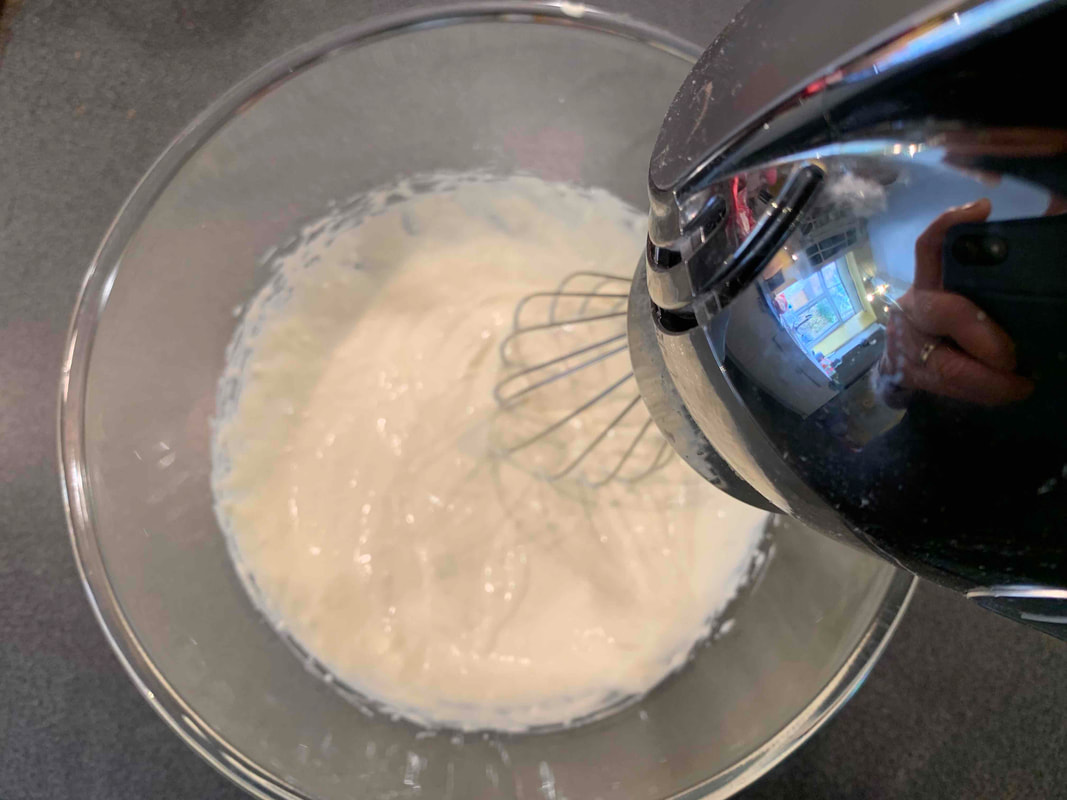
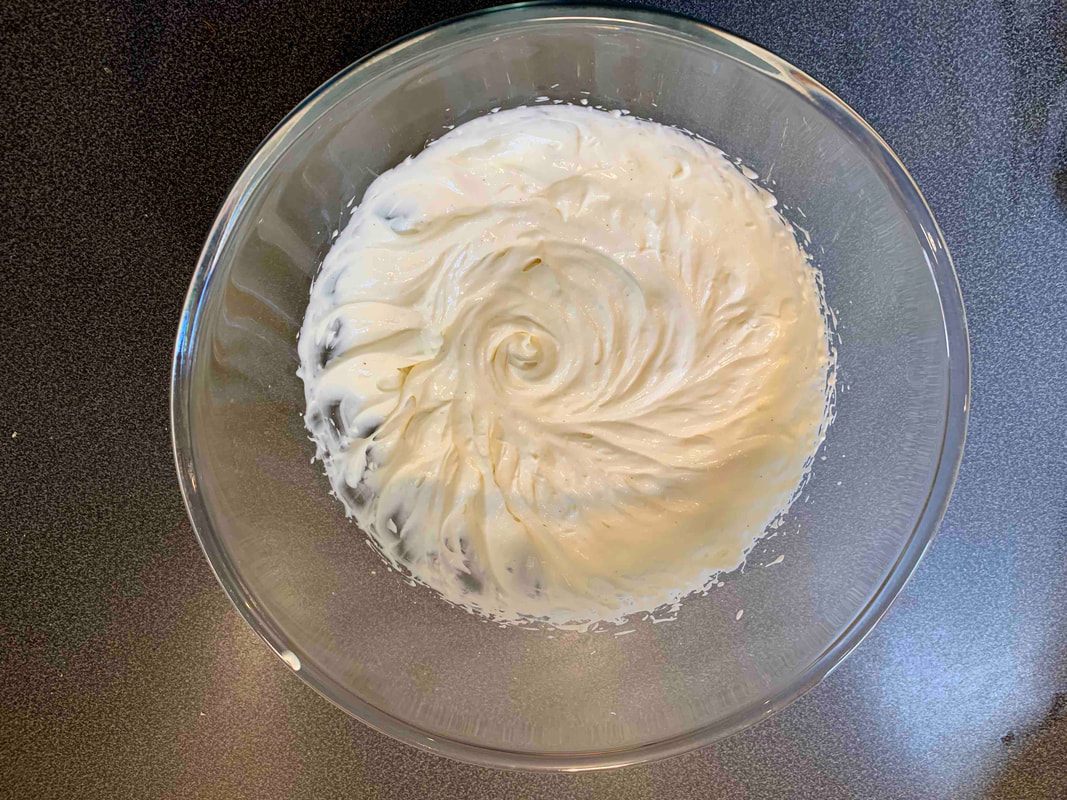
Using a hand or electric whisk, gently beat together the yoghurt, icing sugar and vanilla in bowl until smooth. Then add the cream and continue to whisk. The mixture will begin to thicken.
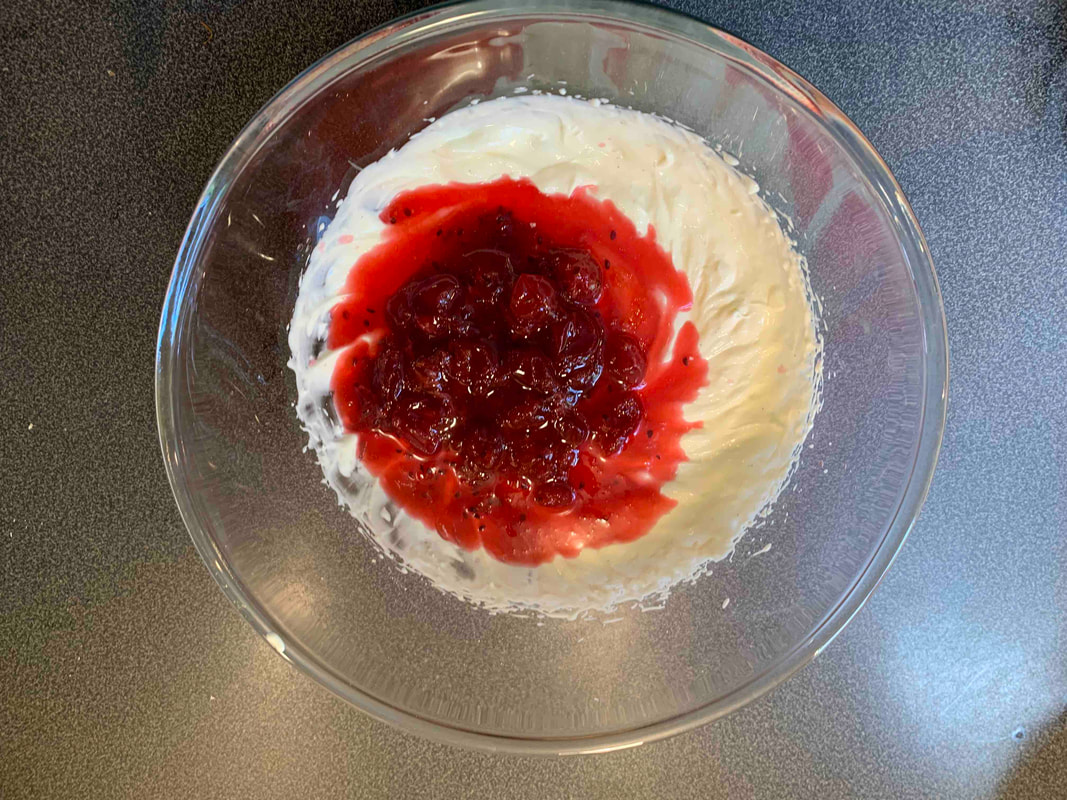
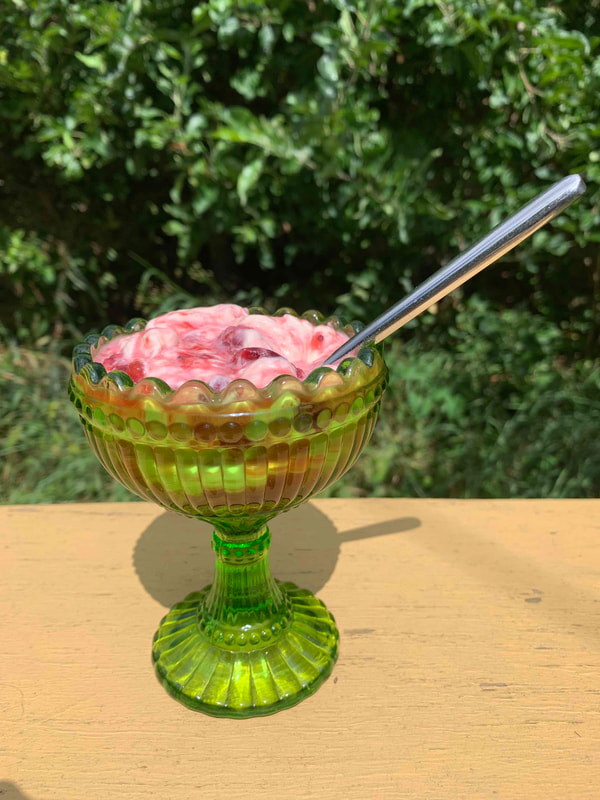
Place the gooseberry pulp on the thick, creamy mixture and, with a small spoon or a skewer, run the fruit through the mix. Don’t overdo it - you want to create a swirl, rather than mix everything together completely. Decant into glasses and serve.
Gently bring to a simmer. When the fruit starts to burst open remove the pan from the heat.
With a fork mash the gooseberries until you have a pulp. Transfer to a bowl and then chill in the fridge for about 20 minutes or until cold.
Using a hand or electric whisk, gently beat together the yoghurt, icing sugar and vanilla in bowl until smooth. Then add the cream and continue to whisk. The mixture will begin to thicken.
Place the gooseberry pulp on the thick, creamy mixture and, with a small spoon or a skewer, run the fruit through the mix. Don’t overdo it - you want to create a swirl, rather than mix everything together completely. Decant into glasses and serve.
My body has a few miles on the clock now. It’s been lifting, walking, running, eating, dancing, snoring and playing for 69 years and remarkably, it seems good for another 69 (though that might be a tad optimistic!). I put a lot of this down to what happens in the first minutes of every day when I unroll a mat, turn on some quiet music and lose myself in a sequence of muscle-stretching, mind-relaxing positions. It wasn’t always so.
I was a mercurial child, one minute running, jumping and riding my bike and the next flat out on the sofa, my little lungs wheezing like leaky harmonium bellows. I was stuck in this cycle until a blue inhaler was put in my hand for the first time and I was no longer in thrall to the chest-clutching, throat-strangling grasp of asthma. But I knew from then on that my body needed looking after.
When I was a student in Durham a peculiar change took place over my generation. We somehow went from competitive drinking, heavy smoking, bacon butty munchers to whole food scoffing, earth befriending pseudo Buddhists. I suppose it was inevitable after the heroes of our teenage years, the holy Beatles, had embraced mysticism, that it would come our way in time.
And so yoga entered my life. As someone who always struggled with sitting cross legged as a child I didn’t see myself as a promising yogi but, as I came to see, that’s kinda the point. Despite the rise of various would-be gurus around me who claimed to be “more spiritual than thou” they couldn’t obscure the fact that yoga is for everyone.
So I picked up a few poses, absorbed the wisdom that “you’re as old as your spine”, creaked my body into mountains, warriors, planks and downward facing dogs and felt amazing.
You’d think I’d be hooked, wouldn’t you, but I was just human. A few years of drinking too much, the sleep-deprivation that comes with bringing up children and worrying about there never being enough money all got in the way but gradually I came back to the yoga mat.
Now I get up every morning, put on some lovely music and spend a happy twenty minutes trying to emulate the gracefulness of a swan, while more closely resembling an arthritic flamingo. My metal knee limits a few poses, but not many and I rise from my purple mat refreshed, awake and ready for the day.
I still ache, I still lose my balance but I still come back for more. As I hold poses my mind focuses on the moment, and the reality of the day ahead dissolves to the point where it’s just me and my body in a quiet niche of time.
A book recommendation:
If you’d like helpful guide I’m a big fan of B.K.S Iyengar’s “Light on Yoga”. Rather than a thin white woman with a perfectly sculpted body wrapped in a designer leotard he’s an old Indian man in black pants. He shows you a host of positions and explains what each one is good for.
I was a mercurial child, one minute running, jumping and riding my bike and the next flat out on the sofa, my little lungs wheezing like leaky harmonium bellows. I was stuck in this cycle until a blue inhaler was put in my hand for the first time and I was no longer in thrall to the chest-clutching, throat-strangling grasp of asthma. But I knew from then on that my body needed looking after.
When I was a student in Durham a peculiar change took place over my generation. We somehow went from competitive drinking, heavy smoking, bacon butty munchers to whole food scoffing, earth befriending pseudo Buddhists. I suppose it was inevitable after the heroes of our teenage years, the holy Beatles, had embraced mysticism, that it would come our way in time.
And so yoga entered my life. As someone who always struggled with sitting cross legged as a child I didn’t see myself as a promising yogi but, as I came to see, that’s kinda the point. Despite the rise of various would-be gurus around me who claimed to be “more spiritual than thou” they couldn’t obscure the fact that yoga is for everyone.
So I picked up a few poses, absorbed the wisdom that “you’re as old as your spine”, creaked my body into mountains, warriors, planks and downward facing dogs and felt amazing.
You’d think I’d be hooked, wouldn’t you, but I was just human. A few years of drinking too much, the sleep-deprivation that comes with bringing up children and worrying about there never being enough money all got in the way but gradually I came back to the yoga mat.
Now I get up every morning, put on some lovely music and spend a happy twenty minutes trying to emulate the gracefulness of a swan, while more closely resembling an arthritic flamingo. My metal knee limits a few poses, but not many and I rise from my purple mat refreshed, awake and ready for the day.
I still ache, I still lose my balance but I still come back for more. As I hold poses my mind focuses on the moment, and the reality of the day ahead dissolves to the point where it’s just me and my body in a quiet niche of time.
A book recommendation:
If you’d like helpful guide I’m a big fan of B.K.S Iyengar’s “Light on Yoga”. Rather than a thin white woman with a perfectly sculpted body wrapped in a designer leotard he’s an old Indian man in black pants. He shows you a host of positions and explains what each one is good for.
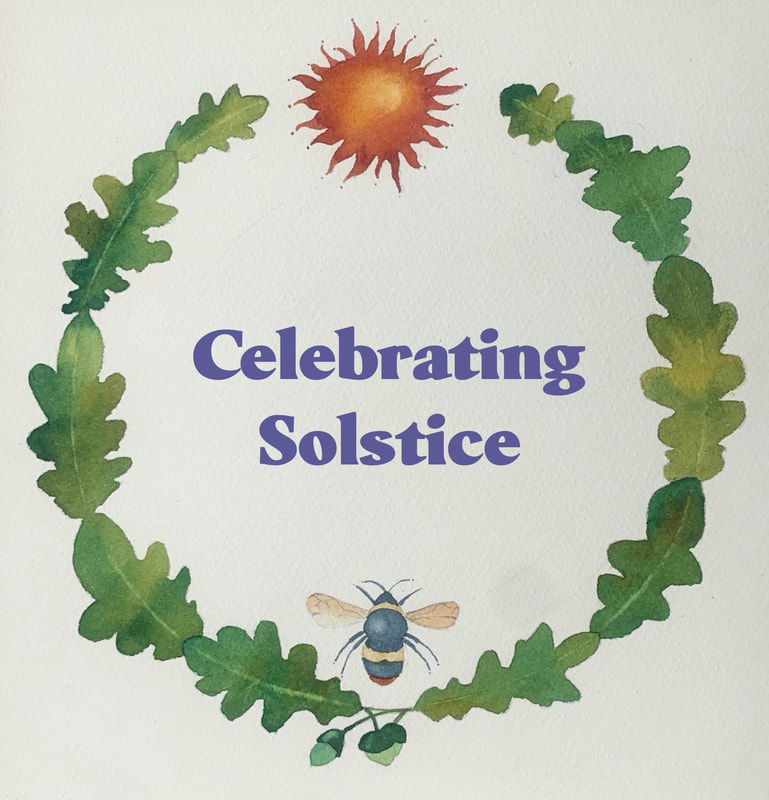 | At this time of year when the sun is at it’s height and the days are the longest we celebrate the Summer solstice. In ancient pagan and Celtic times we think this solstice was known as Litha. Litha is an ancient solar celebration, the high point of summer which was commemorated in some way by most agricultural societies. Stone circles, such as Stonehenge, were positioned in such a way as to emphasise the rising of the sun on Litha. Ancient traditions in Europe included rolling large wheels set on fire down hill into water. Celts and Christian monks have documented the lighting of hilltop bonfires, near holy wells, to welcome in the sunrise and to signify the sacred space between heaven and earth. These bonfires were also a totem of the sun’s full expansion. |
A few things to try at Summer Solstice:
Light a fire with friends/family and jump over it (carefully!). Have fun. Sing. Dance. Play. Eat.
Get up early to watch the Solstice sunrise. Take a picnic breakfast of your favourite foods and fruits. Lie on the earth, and feel the union between the earth, your skin. and the sun.
Drink Mead. Bees are at the pinnacle of honey making and mead was considered to be the nectar of the Gods, liquid sun, which has life-giving and magical properties. When you drink it think with gratitude of all the goodness in your life.
Create a Litha altar - an arrangement of natural objects, oak leaves and herbs. Focus on the colours of yellow, orange and gold.
SYMBOLS OF SOLSTICE
PLANT: SAINT JOHN’S WORT
Hypericum Perforatum
Saint John’s Wort, also sacred to Saint Joan, is the epitome of Midsummer with its sunny yellow blooms, redolent with healing properties, and its many associations with the Sun and the element of fire. It flowers at the Solstice and is customarily gathered on the 24th June, when both the Saints celebrate their feast days. It features in the foreground of Paul Nash's iconic painting The Landscape of the Summer Solstice.
Traditionally bringing this herb into your home on Midsummer provides protection from evil spirits, illness and fire. It would therefore be an auspicious herb to weave into a summer wreath for your door. You might also want to place some St John's Wort beside your bed, as it's strongly associated with dream magic and prophetic dreaming.
PLEASE NOTE: Saint John’s Wort has been used in herbalism for centuries. It contains powerful constituents which can cause reactions and interact with prescribed medication. Please do not use medicinally without referring to a qualified medical herbalist.
TREE: OAK
Quercus
The mighty Oak is the sentinel of Midsummer. It’s Celtic name ‘Duir’ means doorway;
standing as a portal between the seasons. The high-point of any walk is to find a huge hollow-oak in the landscape; you can literally step into that portal.
Perhaps because of its tendency to stand alone in the land, it is particularly prone to lightning strikes, but also has a remarkable ability to recover and regenerate. It was this characteristic that led to acorns being regarded as lucky charms and the old custom of placing acorns in your window to protect your house and ward off lightning strikes.
There is the wonderful tale of the Oak King and the Holly King, when the forces of summer and winter battle as the seasons turn. By Midsummer the Oak King is at the pinnacle of his strength and the Holly King at his lowest ebb. The Oak King will rule, until Holly regains his vigour in the Autumn, and the eternal cycle continues.
With thanks to both Kay Aldred and Sarah Heagney who contributed to this blog.
Light a fire with friends/family and jump over it (carefully!). Have fun. Sing. Dance. Play. Eat.
Get up early to watch the Solstice sunrise. Take a picnic breakfast of your favourite foods and fruits. Lie on the earth, and feel the union between the earth, your skin. and the sun.
Drink Mead. Bees are at the pinnacle of honey making and mead was considered to be the nectar of the Gods, liquid sun, which has life-giving and magical properties. When you drink it think with gratitude of all the goodness in your life.
Create a Litha altar - an arrangement of natural objects, oak leaves and herbs. Focus on the colours of yellow, orange and gold.
SYMBOLS OF SOLSTICE
PLANT: SAINT JOHN’S WORT
Hypericum Perforatum
Saint John’s Wort, also sacred to Saint Joan, is the epitome of Midsummer with its sunny yellow blooms, redolent with healing properties, and its many associations with the Sun and the element of fire. It flowers at the Solstice and is customarily gathered on the 24th June, when both the Saints celebrate their feast days. It features in the foreground of Paul Nash's iconic painting The Landscape of the Summer Solstice.
Traditionally bringing this herb into your home on Midsummer provides protection from evil spirits, illness and fire. It would therefore be an auspicious herb to weave into a summer wreath for your door. You might also want to place some St John's Wort beside your bed, as it's strongly associated with dream magic and prophetic dreaming.
PLEASE NOTE: Saint John’s Wort has been used in herbalism for centuries. It contains powerful constituents which can cause reactions and interact with prescribed medication. Please do not use medicinally without referring to a qualified medical herbalist.
TREE: OAK
Quercus
The mighty Oak is the sentinel of Midsummer. It’s Celtic name ‘Duir’ means doorway;
standing as a portal between the seasons. The high-point of any walk is to find a huge hollow-oak in the landscape; you can literally step into that portal.
Perhaps because of its tendency to stand alone in the land, it is particularly prone to lightning strikes, but also has a remarkable ability to recover and regenerate. It was this characteristic that led to acorns being regarded as lucky charms and the old custom of placing acorns in your window to protect your house and ward off lightning strikes.
There is the wonderful tale of the Oak King and the Holly King, when the forces of summer and winter battle as the seasons turn. By Midsummer the Oak King is at the pinnacle of his strength and the Holly King at his lowest ebb. The Oak King will rule, until Holly regains his vigour in the Autumn, and the eternal cycle continues.
With thanks to both Kay Aldred and Sarah Heagney who contributed to this blog.
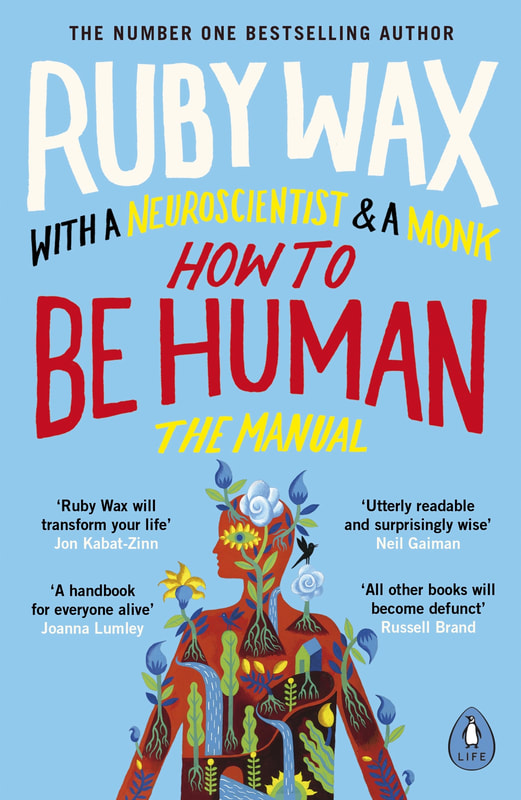
How To Be Human
by Ruby Wax
Published by Penguin Books
We’ve done a lot of reading here in the Happy House this winter and one book which has truly enhanced our bookshelves is this.
It sounds like the set up for a joke: what do you get when you combine a stand-up comedian, a neuroscientist and a monk? Well, when the comedian is Ruby Wax, who set aside a career in laughter to take a masters degree in mindfulness therapy and campaigning for better mental health provision, the results are funny, insightful and inspiring.
We’ve learned a lot about the power mindfulness has to bring happiness and calm through the thoughts and practical exercises in this brilliant book. The theory, the science and the spiritual dimension of how we can set ourselves free of stress are explained here with depth but also with humour. Ruby covers evolution, thought, emotion, addiction, relationships and compassion. A great read.
Ian Scott Massie March 2022
by Ruby Wax
Published by Penguin Books
We’ve done a lot of reading here in the Happy House this winter and one book which has truly enhanced our bookshelves is this.
It sounds like the set up for a joke: what do you get when you combine a stand-up comedian, a neuroscientist and a monk? Well, when the comedian is Ruby Wax, who set aside a career in laughter to take a masters degree in mindfulness therapy and campaigning for better mental health provision, the results are funny, insightful and inspiring.
We’ve learned a lot about the power mindfulness has to bring happiness and calm through the thoughts and practical exercises in this brilliant book. The theory, the science and the spiritual dimension of how we can set ourselves free of stress are explained here with depth but also with humour. Ruby covers evolution, thought, emotion, addiction, relationships and compassion. A great read.
Ian Scott Massie March 2022
An Introduction to the Spring Equinox
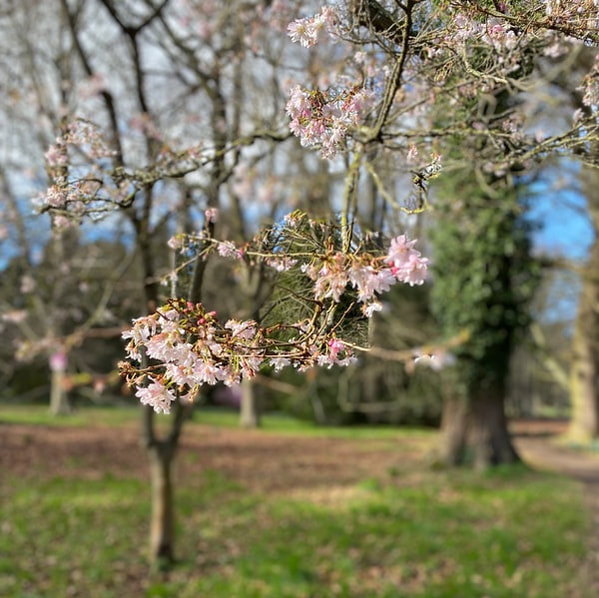
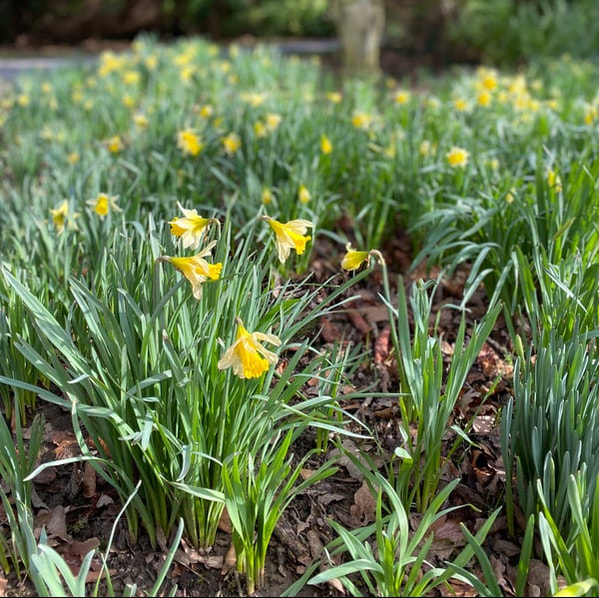
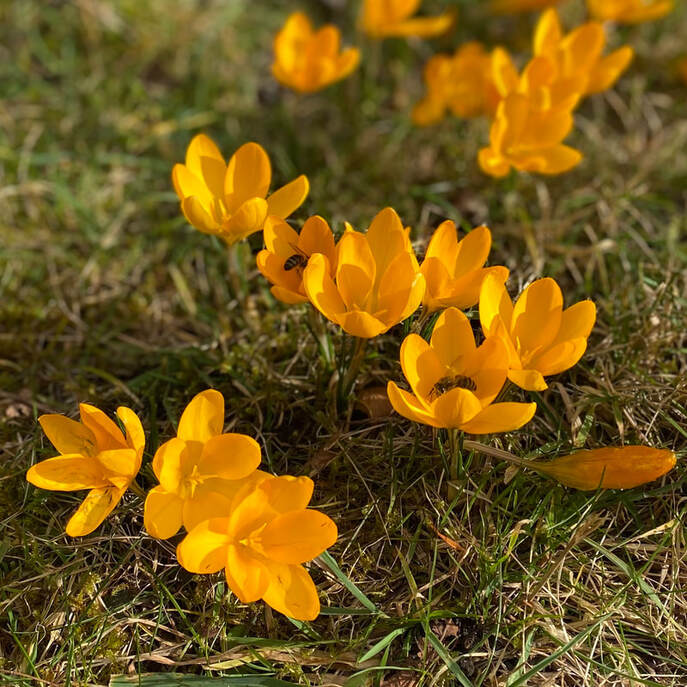
Spring Equinox, also known as the Vernal Equinox or Ostara, is calendared falling March 21st-22nd each year. It signals the great reawakening of the Earth and the birthing of new life. At Imbolc the sap starts to rise and there is a quickening and swelling and a promise of life is visible in nature. At Ostara growth and life explodes into action.
The word Equinox means equal night and is the moment of night and day in perfect balance. Vernal means of Spring and so the Vernal Equinox marks the first day of Spring. Ostara is the pagan name for this Equinox and is part of the yearly cycle of festivals observed as part of the Wheel of the Year. The Wheel of the Year is anchored around four main annual, cross quarter point, solar events, Spring and Autumn Equinox and Summer and Winter Solstice. This cross symbology event in this wheel has been templated onto the hot cross bun, eaten at this time of year.
At Spring Equinox, the equator of the Earth is directly overhead at noon and moves through the centre of the disc of the visible sun. This is known as the First Point of Aries. A new astrological year begins as the Sun moves into the first zodiac sign, Aries. There is a huge shift in energy into the masculine, the Sun heats, instigates and motivates us into trailblazing action, autonomy and the light half of the year, the seasons of Spring and Summer.
 |  |  |
Symbolism in the Spring Equinox
Gods/Goddesses
The triple Goddess returns as the Maiden from her winter Crone slumber in the underworld belly egg of the great Mother Goddess Gaia (the earth) at the Spring Equinox. The primary maiden goddess associated with this Equinox is Ostara, also known as Oestre, Eostre or Eastr. She is the Germanic Lunar Goddess of the Dawn and Spring, who is often depicted as part hare or holding a hare, the power animal of regenerative and cyclical shapeshifting which moves through birth and death, like the moon, and so is a totem of eternal life. She can also be seen as holding a willow basket of eggs, symbolising the potentiality, nourishment, birth and the time when animal’s sexual cycles are most fertile and we can make connections with estrogen the ovulation stimulating hormone. Pagans celebrate the sacred marriage of the Sun God and the maiden Goddess who conceives the Divine Child at this festival which she will birth as the Great Mother at Winter Solstice.
It is possible to see the appropriation of this festival by Christianity Easter, the death and resurrection, rebirth, of Christ, the Light. Easter occurs on the first Sunday after the first full moon after Spring Equinox. The hare has become the Easter bunny in modern day celebrations.
Colours
Colours of this festival are pink, green and yellow and so connecting with crystals which carry the frequency of this is useful. Rose quartz especially.
Plants
TREE: BIRCH
Purity – Renewal – Hope
Elegant Birch, comes into leaf in early Spring, a herald of the vernal equinox and of Ostara/Easter. Appositely, Birch twigs were used to make besom brooms. A new broom sweeps clean, as the saying goes, and this is particularly significant for the new life, fertility and fresh beginnings that is the promise of Ostara.
The graceful character of Birch, also called the Lady of the Woods, belies its hardiness. In fact, it is known as a pioneer tree because of its capacity to thrive in the most inhospitable of places; often the first tree to return to a woodland after some natural disaster has befallen.
This elegant, native tree has become rooted in the fabric and history of our islands. For instance, Beating the Bounds was an ancient custom, still practised in some parts of Britain, where bundles of birch or willow twigs were used to tap on landmarks along the boundary of the Parish, formally establishing and preserving the boundaries. The protective qualities of Birch were also employed in making cradles for new-borns, in the belief that the wood shielded babies from malign spirits and would thwart any attempts by the faery folk to steal the baby and replace it with a changeling. During a less enlightened part of our history, being ‘birched’ was synonymous with the widespread practice of corporal punishment (using bundles of twigs) applied to unfortunate school children, criminals and sea-farers. Happily, times have changed!
PLANT: VIOLET
Venus – Loyalty – Love
The Spring equinox is the flowering time of year, even the full moon in May is known as the Flower Moon. An entrancing, but oft overlooked wildflower appearing at this time of year is the Violet; a dainty addition to grassy banks and woodland edges. If you come across fragrant flowers, then you have found Sweet Violets Viola odorata. If scentless, then it is likely you have discovered Common Dog Violet Viola riviniana.
In fact, a common myth surrounding Sweet Violet is that, as you inhale the fragrance, the flower steals away your sense of smell, leading to the saying ‘You can only smell violets once.’ If you should have this experience, don’t be alarmed, the effect is only temporary, due to active compounds in the plant that de-sensitize the smell receptors in your nose.
Violets have been popular additions to British gardens since Mediaeval times. In the symbolism of this period, they were linked with Roses and Lilies as the flowers of Paradise, and were put to many fascinating uses. For instance, a floral water made of boiled Violets came highly recommended for ‘diseases of the groin’ and a rather more delightful sounding pudding recipe called ‘Vyolette’ was made from the flower petals, milk and almonds.
Most folk-tales associated with this charming flower are positive ones. Dreaming of Violets is particularly good news, believed to indicate you are about to come into good fortune.
Sweet Violets, along with their deep green heart-shaped leaves, have many links with love and romance and are forever immortalised in the Valentine’s rhyme ‘Roses are red, Violets are blue’. They also crop up in the love story between Napoleon and Josephine, being the lady’s favourite flower and, on Napoleon’s death, a lock of Josephine’s hair and some pressed violets were found in a locket around his neck.
Rituals to do at Spring Equinox
Spring cleaning your home
Life audit and assessment make plans for all areas of your life
Write a prayer or poem or creative a celebratory piece of art of gratitude for the Earth
Planting seeds with the intention of abundance and manifestation for herbs, vegetables, flowers you can use during autumn and winter
Standing again at tree trunk to receive the rising lifeforce energy flow
Love making
Hanging prayer flags or streamers in trees of your garden to harness the energy
Creating an altar themed around the colours, mythos, energies and symbols of the festival
Egg painting
Gods/Goddesses
The triple Goddess returns as the Maiden from her winter Crone slumber in the underworld belly egg of the great Mother Goddess Gaia (the earth) at the Spring Equinox. The primary maiden goddess associated with this Equinox is Ostara, also known as Oestre, Eostre or Eastr. She is the Germanic Lunar Goddess of the Dawn and Spring, who is often depicted as part hare or holding a hare, the power animal of regenerative and cyclical shapeshifting which moves through birth and death, like the moon, and so is a totem of eternal life. She can also be seen as holding a willow basket of eggs, symbolising the potentiality, nourishment, birth and the time when animal’s sexual cycles are most fertile and we can make connections with estrogen the ovulation stimulating hormone. Pagans celebrate the sacred marriage of the Sun God and the maiden Goddess who conceives the Divine Child at this festival which she will birth as the Great Mother at Winter Solstice.
It is possible to see the appropriation of this festival by Christianity Easter, the death and resurrection, rebirth, of Christ, the Light. Easter occurs on the first Sunday after the first full moon after Spring Equinox. The hare has become the Easter bunny in modern day celebrations.
Colours
Colours of this festival are pink, green and yellow and so connecting with crystals which carry the frequency of this is useful. Rose quartz especially.
Plants
TREE: BIRCH
Purity – Renewal – Hope
Elegant Birch, comes into leaf in early Spring, a herald of the vernal equinox and of Ostara/Easter. Appositely, Birch twigs were used to make besom brooms. A new broom sweeps clean, as the saying goes, and this is particularly significant for the new life, fertility and fresh beginnings that is the promise of Ostara.
The graceful character of Birch, also called the Lady of the Woods, belies its hardiness. In fact, it is known as a pioneer tree because of its capacity to thrive in the most inhospitable of places; often the first tree to return to a woodland after some natural disaster has befallen.
This elegant, native tree has become rooted in the fabric and history of our islands. For instance, Beating the Bounds was an ancient custom, still practised in some parts of Britain, where bundles of birch or willow twigs were used to tap on landmarks along the boundary of the Parish, formally establishing and preserving the boundaries. The protective qualities of Birch were also employed in making cradles for new-borns, in the belief that the wood shielded babies from malign spirits and would thwart any attempts by the faery folk to steal the baby and replace it with a changeling. During a less enlightened part of our history, being ‘birched’ was synonymous with the widespread practice of corporal punishment (using bundles of twigs) applied to unfortunate school children, criminals and sea-farers. Happily, times have changed!
PLANT: VIOLET
Venus – Loyalty – Love
The Spring equinox is the flowering time of year, even the full moon in May is known as the Flower Moon. An entrancing, but oft overlooked wildflower appearing at this time of year is the Violet; a dainty addition to grassy banks and woodland edges. If you come across fragrant flowers, then you have found Sweet Violets Viola odorata. If scentless, then it is likely you have discovered Common Dog Violet Viola riviniana.
In fact, a common myth surrounding Sweet Violet is that, as you inhale the fragrance, the flower steals away your sense of smell, leading to the saying ‘You can only smell violets once.’ If you should have this experience, don’t be alarmed, the effect is only temporary, due to active compounds in the plant that de-sensitize the smell receptors in your nose.
Violets have been popular additions to British gardens since Mediaeval times. In the symbolism of this period, they were linked with Roses and Lilies as the flowers of Paradise, and were put to many fascinating uses. For instance, a floral water made of boiled Violets came highly recommended for ‘diseases of the groin’ and a rather more delightful sounding pudding recipe called ‘Vyolette’ was made from the flower petals, milk and almonds.
Most folk-tales associated with this charming flower are positive ones. Dreaming of Violets is particularly good news, believed to indicate you are about to come into good fortune.
Sweet Violets, along with their deep green heart-shaped leaves, have many links with love and romance and are forever immortalised in the Valentine’s rhyme ‘Roses are red, Violets are blue’. They also crop up in the love story between Napoleon and Josephine, being the lady’s favourite flower and, on Napoleon’s death, a lock of Josephine’s hair and some pressed violets were found in a locket around his neck.
Rituals to do at Spring Equinox
- Renewal and cleansing rituals:
Spring cleaning your home
Life audit and assessment make plans for all areas of your life
Write a prayer or poem or creative a celebratory piece of art of gratitude for the Earth
- Union rituals
Planting seeds with the intention of abundance and manifestation for herbs, vegetables, flowers you can use during autumn and winter
Standing again at tree trunk to receive the rising lifeforce energy flow
Love making
- Celebrating the rebirth of the Light, Warmth and Action
Hanging prayer flags or streamers in trees of your garden to harness the energy
Creating an altar themed around the colours, mythos, energies and symbols of the festival
Egg painting
The Midwinter Solstice is Here!
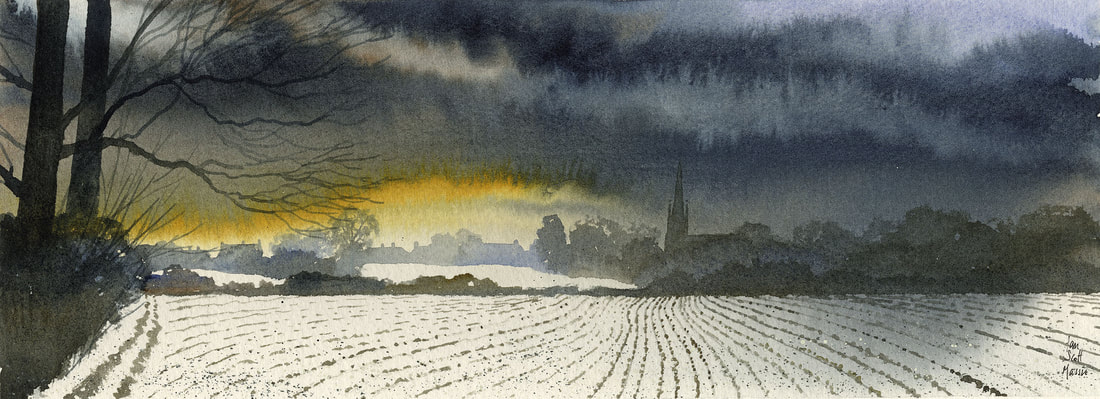
From now on the days will get lighter.
We are at the point where winter is gripping us fast and yet the first signs of spring are already around us. There are tight curled sticky buds on the chestnut trees and the snowdrops are punching their way through the icy ground. Its a time of celebration and of hope - and this year we really need to embrace hopefulness!
Kay Turner and Sarah Heagney have done some research into the history, traditions and plants associated with the Solstice. Read on and discover the hidden stories behind this special time of year
Midwinter's Day: The time of the Oak and Holly Kings, of the Norse God Odin, of the Mother Goddess, the Sun God and the birth of the Divine Child
Yule is the Winter Solstice and the longest night/shortest day of the year. It falls on December 21st and is a festival which predates the Christian celebration of Christmas. Legends tell us that Celtic druids would cut the mistletoe, a symbol of life and light in death and darkness from the sacred Oak trees. The Yule log was lit during Yule to conquer darkness and banish evil spirits, as during this mid-winter point darkness peaks and there is a pause as the sun stands still, rising and setting in the same place. Our ancestors would have marked this point on the horizon in their stone circles.
The Holly King who has ruled earth since Summer Solstice resumes his battle with his Oak King brother. This time the Holly King surrenders, and the Oak King wins initiating the Sun to begin its return.
The Evolution of Yule: Pre-Christian origins of the word Yule are thought to be linked to the name Jolnir, ‘the Yule one’, the long-bearded Norse god Odin, who delivered gifts with an eight-legged flying horse. This legend could have been a precursor to that of Father Christmas.
In Scandinavia people celebrated a 12-day winter festival called Jul and activities included hanging evergreen wreaths and mistletoe and carol singing.
Christianity is likely to have layered Christmas traditions over these alongside adopting the narrative of the birth of the Divine Child, the sun god. The winter solstice is the birthday of both the Sun and Son, the Child of Light by the great Mother Goddess. Christianity reconfigured this as the Madonna and Child.
Masham, home of the Happy House, is the site of an Anglo Scandinavian graveyard which lies under the Market Place (in the photo above). Being a place where Vikings and Christians mixed and intermarried this may be one of the first places where the two traditions of Yule and Christmas came together.
Yule is the Winter Solstice and the longest night/shortest day of the year. It falls on December 21st and is a festival which predates the Christian celebration of Christmas. Legends tell us that Celtic druids would cut the mistletoe, a symbol of life and light in death and darkness from the sacred Oak trees. The Yule log was lit during Yule to conquer darkness and banish evil spirits, as during this mid-winter point darkness peaks and there is a pause as the sun stands still, rising and setting in the same place. Our ancestors would have marked this point on the horizon in their stone circles.
The Holly King who has ruled earth since Summer Solstice resumes his battle with his Oak King brother. This time the Holly King surrenders, and the Oak King wins initiating the Sun to begin its return.
The Evolution of Yule: Pre-Christian origins of the word Yule are thought to be linked to the name Jolnir, ‘the Yule one’, the long-bearded Norse god Odin, who delivered gifts with an eight-legged flying horse. This legend could have been a precursor to that of Father Christmas.
In Scandinavia people celebrated a 12-day winter festival called Jul and activities included hanging evergreen wreaths and mistletoe and carol singing.
Christianity is likely to have layered Christmas traditions over these alongside adopting the narrative of the birth of the Divine Child, the sun god. The winter solstice is the birthday of both the Sun and Son, the Child of Light by the great Mother Goddess. Christianity reconfigured this as the Madonna and Child.
Masham, home of the Happy House, is the site of an Anglo Scandinavian graveyard which lies under the Market Place (in the photo above). Being a place where Vikings and Christians mixed and intermarried this may be one of the first places where the two traditions of Yule and Christmas came together.
Two Midwinter Plants - the stories behind the Yew and the Ivy
TREE: YEW
Taxus baccata
Eternity – Ancestors – Air & Water
The ancient and venerable Yew has magical associations with Winter and, through its toxicity, it is linked with death, but also with regeneration. It is a symbol of longevity and rebirth: when an old Yew dies, the fallen branches sprout roots and a new tree begins to grow. Yew trees frequently grow hollow at the centre, characterizing their place as guardians of the spiritual dimension and embodying the power of empty space.
Part of the Yew tree’s evergreen magic is undoubtedly its incredibly long life-span, with trees living up to 3,000 years, (they have to be over 900 years old to be officially recognised as an ‘Ancient Yew’). They are frequently to be found growing on sacred ground, beside churches, wells and springs, and are seen as an indicator of ancient places of worship, dating from Druidic and Celtic times.
During their long lives, Yew trees have become steeped in folk tales and traditions, many of which centre around burial practices and funerary rites. However, in some English counties there was also a belief that lost items could be found by taking a Yew branch to guide you as you searched. The custom was that the Yew would lead you straight to your lost belongings, with the branch turning in your hand as you reached them.
If you fancy a trip to meet a truly venerable tree, then some fine examples of Ancient Yews are;
the Crowhurst Yew in East Sussex
the Ankerwycke Yew in Surrey
St Cynog’s Church Yew near Swansea
the Fortingall Yew in Perthshire.
PLEASE NOTE: The bark, needles and berry seeds of Yew are all highly toxic, so please approach respectfully.
PLANT:IVY
Hedera helix
Love - Fidelity - Saturn
The deep green leaves and long, trailing stems of Ivy are to be found all over the British Isles. Its tendrils will wrap around trees and climb up walls, generally binding things together. Perhaps this tendency is why it has come to represent faithfulness, often being used in hand-fasting ceremonies and to adorn bridal bouquets. In old English tradition, Ivy was also used as a ceremonial binding to tie the last sheaf of the harvest.
Another interesting tradition, traces of which can still sometimes be seen in modern life, is the once widespread belief that Ivy had the power to prevent drunkenness.
In ancient times, Ivy crowns would be worn for this purpose and Bacchus, the Greek god of wine, is often depicted as wearing such a crown. To this day, you might find Ivy leaves appearing on old inn signs or carved decoratively into goblets.
Often a misunderstood plant, Ivy does not actually damage trees, but rather leans on them for support as it grows whilst maintaining its own, separate root system.
It flowers from September to November and is an important source of pollen for bees and insects at this rather frugal time of year. In the autumn, it puts out clusters of black berry fruits which, although poisonous to humans, provide a welcome winter food for the birds. If the Ivy in your garden spreads across the ground, rather than climbing, then you have Hedera Hibernica, the other subspecies of Ivy native to the Britain.
An ancient token of love, peace and protection (as well as hangover prevention!), this may explain why Ivy is so welcome at Yuletide, intertwined with Holly, and used around our homes as decoration.
You can find details of Kay and Sarah's therapies, experiences and online courses on the Happy House website here:
Treatments & therapies
Experiences & Events
Online Courses: Mind, Body, Spirit
Treatments & therapies
Experiences & Events
Online Courses: Mind, Body, Spirit
As I'm writing we're just a few days after Autumn Equinox. We've found it increasingly useful to us to mark these seasons, the wheel of the year, in recent times. To recognise the ebb and flow of life, the ancient knowledge and our part in the natural world.
There are lots of things that mark this equinox: legends, stories, rituals, plants that are associated with it. There are even yoga moves that help align us with this time. There are elements that are associated (water - and a sense of letting go). We have found recognising all of these things can help us connect with the earth, ourselves and each other. So here's a couple of contributions from Kay Turner and Sarah Heagney about some of the Autumn Equinox meanings and rituals...
There are lots of things that mark this equinox: legends, stories, rituals, plants that are associated with it. There are even yoga moves that help align us with this time. There are elements that are associated (water - and a sense of letting go). We have found recognising all of these things can help us connect with the earth, ourselves and each other. So here's a couple of contributions from Kay Turner and Sarah Heagney about some of the Autumn Equinox meanings and rituals...
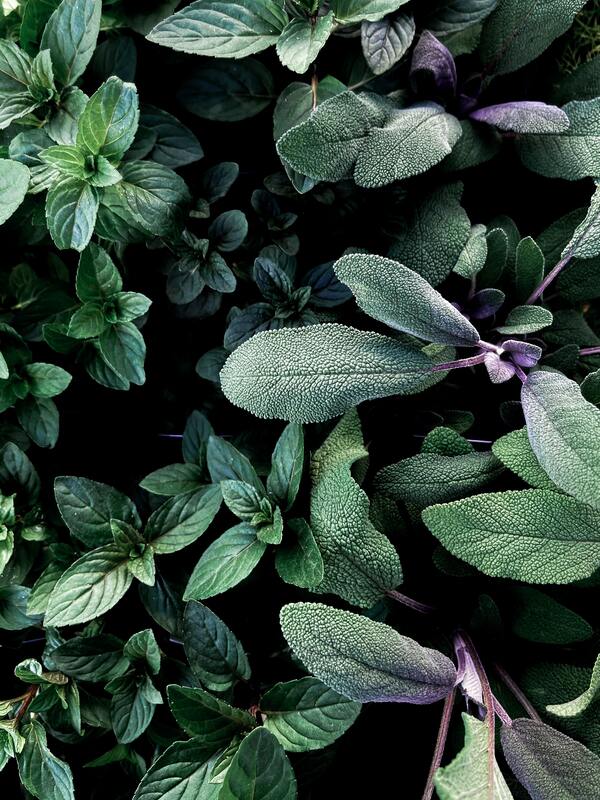
Photo by Jackie Hope on Unsplash
Plants associated with Autumn Equinox
PLANT: SAGE
Salvia Officianalis
Air- Longevity- Jupiter
Aromatic Sage is a wonderful addition to any garden or patio, even if you only have room for a potful. It could be a wise investment, as this plant is associated with wisdom and long life across many different countries and cultures.
In Mediaeval Britain there was a well-known saying which went;
‘He who would live for aye,
Must eat Sage in May.’
This little ditty sums up the belief that regularly eating sage, particularly if eaten every day during the month of May, would render the eater immortal.
Earlier cultures shared this belief, including the Druids who were said to brew a beer with amazing healing properties, the secret ingredient of which was sage.
Gardening lore tells us that, where Sage grows abundantly, the household and its business will prosper. But take care to tend your Sage plants well, for should they wilt and die then the fortunes of the household are also expected to take a turn for the worse!
A more contemporary association would be using the cleansing scent of Sage essential oil or Sage tea to promote concentration and mental clarity; great to have on hand in your home-office or work space. Also, if vivid dreams have troubled you of late, then some sage tucked into your pillow is said to be protective against nightmares.
PLEASE NOTE: White sage is frequently sold as cleansing or ‘smudging’ sticks to clear yourself or your space. This variety of Sage does not grow in the UK, so runs the risk of being over-harvested from indiginous areas of the American south-west which is its natural habitat. The good news is that Garden Sage and Purple Sage are frost hardy and adapted to our climate, so these are a great option to grow yourself and wild-craft your own bespoke cleansing sticks :)
Thanks to Sarah Heagney @sarahheagneysoundtherapy for putting this together, as well as our resident sound therapist Sarah is a forager with an excellent knowledge of plants..
PLANT: SAGE
Salvia Officianalis
Air- Longevity- Jupiter
Aromatic Sage is a wonderful addition to any garden or patio, even if you only have room for a potful. It could be a wise investment, as this plant is associated with wisdom and long life across many different countries and cultures.
In Mediaeval Britain there was a well-known saying which went;
‘He who would live for aye,
Must eat Sage in May.’
This little ditty sums up the belief that regularly eating sage, particularly if eaten every day during the month of May, would render the eater immortal.
Earlier cultures shared this belief, including the Druids who were said to brew a beer with amazing healing properties, the secret ingredient of which was sage.
Gardening lore tells us that, where Sage grows abundantly, the household and its business will prosper. But take care to tend your Sage plants well, for should they wilt and die then the fortunes of the household are also expected to take a turn for the worse!
A more contemporary association would be using the cleansing scent of Sage essential oil or Sage tea to promote concentration and mental clarity; great to have on hand in your home-office or work space. Also, if vivid dreams have troubled you of late, then some sage tucked into your pillow is said to be protective against nightmares.
PLEASE NOTE: White sage is frequently sold as cleansing or ‘smudging’ sticks to clear yourself or your space. This variety of Sage does not grow in the UK, so runs the risk of being over-harvested from indiginous areas of the American south-west which is its natural habitat. The good news is that Garden Sage and Purple Sage are frost hardy and adapted to our climate, so these are a great option to grow yourself and wild-craft your own bespoke cleansing sticks :)
Thanks to Sarah Heagney @sarahheagneysoundtherapy for putting this together, as well as our resident sound therapist Sarah is a forager with an excellent knowledge of plants..
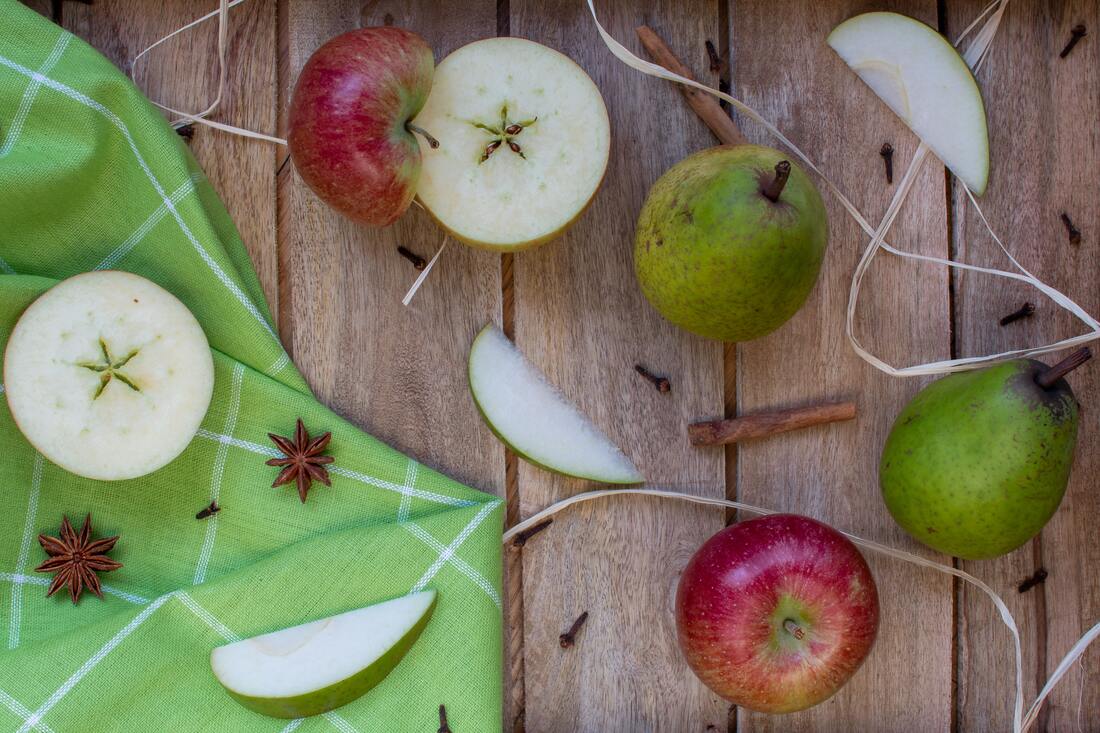
Photo by Martin Bargl on Unsplash
Gods/Goddesses: God Mabon. Goddess Modron.
Symbols: Fruits, Apple, Cornucopia, Grain, Corn dolls
Mabon is the ‘Great Son’ and a Welsh God as well as a mythological figure, thought to be part of the King Arthur’s group. Modron, is an Earth Goddess and Mabon’s ‘Great Mother’. Mabon’s symbol is the Horn of Plenty, the Cornucopia. This is a totem of union of the masculine (the phallic horn) and the feminine (the large round ending, hollowed akin to the vaginal canal) and it is often filled with fruits and vegetables to depict the abundant harvest.
Evolution of Mabon: The Autumn Equinox is the time of day and night, light and dark, masculine and feminine coming into balance again. Mabon marks the second harvest, the fruit harvest, and ancient agricultural societies marked times of transition in light and dark with gratitude, celebration and preparation. At Harvest moon the final sheaf was made into a corn dolly, placed above the hearth of the home, and was honored by the farmer who owned the land. Her kernels were blessed and kept as the first seeds of the following year’s crops. The Masculine God, Mabon, the child of life, ends his life cycle. His death is the gateway for the Dark Goddess rule over the dark half of the year.
Symbolism of the apple: -
A sacred symbol in many traditions, expressing life, knowledge and wholeness at Mabon, the apple represents harvest. The apple contains within it completion and the symbol of the 5-point pentagram star, which depict the elements Earth, Air, Fire, Water, Spirit and directions East, South, West, North and Within.
Autumn Equinox rituals and ceremonies:
There are many traditional and contemporary rituals and ceremonies that are celebrated at this time. They fall into roughly 3 categories:
Giving thanks – self, community, energies, projects
Completion
Clearing out and preparation
A few things to try at Autumn equinox:
Drink golden cider with friends. Honour the waning sun, the apple harvest, and blessings of community. Rest together. Chat about what has unfolded for you since the spring.
Cut an apple width way and meditate on the image of the pentagram star and the totality of the life – death - life cycle held in the apple.
Clean out the home of clutter.
Review your diary and life. Which projects or relationships are complete or life giving – give thanks for them. Which are not manifesting or in alignment or bringing you joy – assess whether you want to keep giving them energy.
Create your Mabon altar – place on your altar natural objects, corn and fruits especially. Focus on the colours of browns, gold, reds. Planting a bulb in a pot to bloom the following spring and placing it on your altar is a lovely way of staying connected to light, life and hope during the darker half of the year.
Make a corn dolly with a child. As you do this talk about the seasons and nature’s cycles.
Thanks to Kay Turner for this Autumn Equinox contribution
Symbols: Fruits, Apple, Cornucopia, Grain, Corn dolls
Mabon is the ‘Great Son’ and a Welsh God as well as a mythological figure, thought to be part of the King Arthur’s group. Modron, is an Earth Goddess and Mabon’s ‘Great Mother’. Mabon’s symbol is the Horn of Plenty, the Cornucopia. This is a totem of union of the masculine (the phallic horn) and the feminine (the large round ending, hollowed akin to the vaginal canal) and it is often filled with fruits and vegetables to depict the abundant harvest.
Evolution of Mabon: The Autumn Equinox is the time of day and night, light and dark, masculine and feminine coming into balance again. Mabon marks the second harvest, the fruit harvest, and ancient agricultural societies marked times of transition in light and dark with gratitude, celebration and preparation. At Harvest moon the final sheaf was made into a corn dolly, placed above the hearth of the home, and was honored by the farmer who owned the land. Her kernels were blessed and kept as the first seeds of the following year’s crops. The Masculine God, Mabon, the child of life, ends his life cycle. His death is the gateway for the Dark Goddess rule over the dark half of the year.
Symbolism of the apple: -
A sacred symbol in many traditions, expressing life, knowledge and wholeness at Mabon, the apple represents harvest. The apple contains within it completion and the symbol of the 5-point pentagram star, which depict the elements Earth, Air, Fire, Water, Spirit and directions East, South, West, North and Within.
Autumn Equinox rituals and ceremonies:
There are many traditional and contemporary rituals and ceremonies that are celebrated at this time. They fall into roughly 3 categories:
Giving thanks – self, community, energies, projects
Completion
Clearing out and preparation
A few things to try at Autumn equinox:
Drink golden cider with friends. Honour the waning sun, the apple harvest, and blessings of community. Rest together. Chat about what has unfolded for you since the spring.
Cut an apple width way and meditate on the image of the pentagram star and the totality of the life – death - life cycle held in the apple.
Clean out the home of clutter.
Review your diary and life. Which projects or relationships are complete or life giving – give thanks for them. Which are not manifesting or in alignment or bringing you joy – assess whether you want to keep giving them energy.
Create your Mabon altar – place on your altar natural objects, corn and fruits especially. Focus on the colours of browns, gold, reds. Planting a bulb in a pot to bloom the following spring and placing it on your altar is a lovely way of staying connected to light, life and hope during the darker half of the year.
Make a corn dolly with a child. As you do this talk about the seasons and nature’s cycles.
Thanks to Kay Turner for this Autumn Equinox contribution
Author
Josie Beszant and/or Ian Scott Massie, both artists from Masham North Yorkshire, Uk.
Archives
March 2025
January 2025
October 2024
September 2024
July 2024
May 2024
April 2024
March 2024
November 2023
October 2023
September 2023
August 2023
July 2023
June 2023
April 2023
March 2023
February 2023
January 2023
December 2022
November 2022
October 2022
September 2022
August 2022
July 2022
June 2022
March 2022
December 2021
September 2021
 RSS Feed